Customizing Your Ribbon Screw Blender for Unique Applications
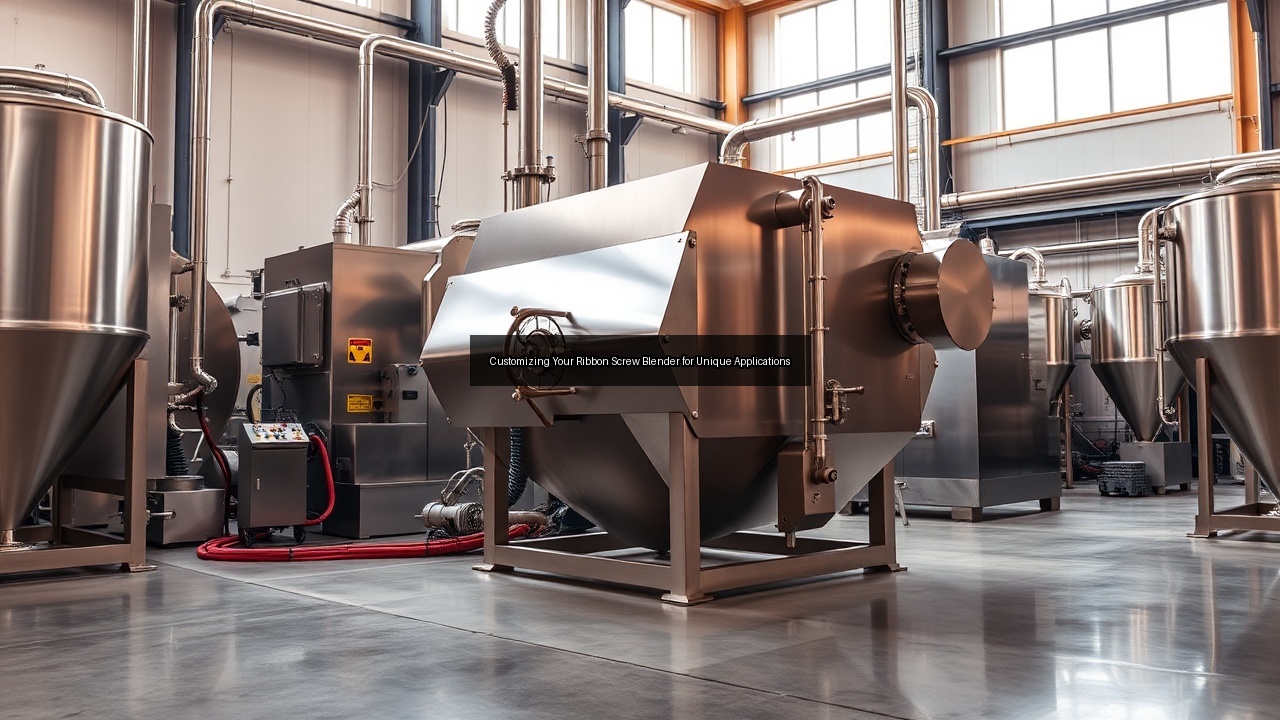
Understanding the Ribbon Screw Blender Design
Key Components of Ribbon Screw Blenders
The design of a ribbon screw blender integrates several key components that work in harmony to achieve effective mixing. At the core of this mixer lies the ribbon screw itself, which consists of helical blades mounted on a central shaft. These blades create a unique mixing action by pushing materials from the center towards the edges of the trough and then back towards the center again. This continuous movement ensures thorough blending of various materials, including powders and dry ingredients.
Another essential element is the trough, which serves as the container for the materials being mixed. Troughs come in varying sizes, allowing for customization based on batch requirements. The construction of the trough, often made from 304 stainless steel, provides durability and resistance to corrosion, making it ideal for industrial applications. Each component plays a critical role in achieving the desired mixing efficiency and product uniformity.
The Role of 304 Stainless Steel in Durability
304 stainless steel holds a prominent position in the construction of ribbon screw blenders. This grade of stainless steel offers excellent resistance to corrosion, which is vital in industrial mixing environments where exposure to chemicals and moisture is common. The non-reactive nature of 304 stainless steel ensures that it does not contaminate the materials being mixed, maintaining product integrity.
Furthermore, the durability of 304 stainless steel translates to a longer lifespan for the blender, reducing the frequency of replacements and repairs. Its ease of cleaning is another significant advantage, making it suitable for industries such as food processing, where hygiene standards are paramount. By choosing a ribbon screw blender constructed from 304 stainless steel, operators invest in a reliable mixer that withstands the rigors of daily use.
How Ribbon Screws Enhance Mixing Efficiency
Ribbon screws play a crucial role in enhancing the mixing efficiency of ribbon screw blenders. Their design allows for a high degree of movement and shear, which helps to break down clumps and ensure a homogeneous mix. The unique shape of the screws enables them to lift and fold materials effectively, promoting uniform distribution throughout the mixture.
Moreover, the ability to adjust the speed of the ribbon screw contributes to achieving optimal mixing results. By manipulating the RPM, operators can fine-tune the mixing process to suit specific materials and desired outcomes. This flexibility makes ribbon screw blenders a versatile choice for various applications across different industries, ensuring that each blend meets the required specifications.
Customizing Your Blender for Specific Applications
Selecting the Right Horsepower for Your Needs
When customizing a ribbon screw blender, selecting the appropriate horsepower is paramount. The horsepower required depends on several factors, including the type of materials being mixed, the batch size, and the desired mixing speed. A more powerful motor can drive the ribbon screws at higher RPM, facilitating quicker and more efficient mixing.
For lighter powder mixtures, a lower horsepower may suffice. However, in cases where denser materials or larger batches are involved, opting for a higher horsepower motor becomes essential. This decision impacts not only the efficiency of the mixing process but also the longevity of the mixer. A correctly sized motor minimizes strain on the components, enhancing overall performance and reducing wear and tear.
Adjusting RPM for Optimal Mixing
Adjusting the RPM of a ribbon screw blender is another critical aspect of customization. Different materials require varying mixing speeds to achieve the best results. For instance, delicate powders may need a slower RPM to prevent degradation, while more robust materials can tolerate higher speeds, allowing for faster blending.
Operators can also experiment with different RPM settings to discover the optimal speed for their specific applications. This flexibility not only enhances mixing efficiency but also contributes to product consistency. Fine-tuning the RPM ensures that the materials mix thoroughly without compromising their physical properties, making this feature indispensable in industrial mixing.
Incorporating Rotary Valves for Controlled Discharge
Incorporating rotary valves into a ribbon screw blender setup offers precise control over material discharge. These valves allow operators to regulate the flow of mixed products from the blender, ensuring consistent output and minimizing waste. The ability to control discharge rates enhances operational efficiency, especially in high-volume production environments.
Rotary valves can be adjusted to accommodate varying batch sizes and material types, further enhancing the versatility of the ribbon screw blender. This customization ensures that users can tailor their mixing and discharge processes to meet specific production requirements, thereby streamlining operations and improving overall productivity.
Applications of Ribbon Screw Blenders in Industry
Mixing Powders and Dry Ingredients
Ribbon screw blenders excel in mixing powders and dry ingredients, making them a staple in various industries. From pharmaceuticals to food processing, these mixers effectively combine a wide range of materials, ensuring uniformity in the final product. The unique design of the ribbon screws allows for efficient movement and blending of powders, reducing the risk of segregation.
In the food industry, ribbon screw blenders mix ingredients like flour, sugar, and spices, creating consistent formulations for baked goods and processed foods. In pharmaceuticals, they blend active ingredients with fillers and excipients, ensuring accurate dosages in tablet production. The adaptability of ribbon screw blenders to handle different material characteristics makes them indispensable in these sectors.
Utilizing Troughs for Large Batch Processing
The trough design of ribbon screw blenders facilitates large batch processing, which is essential in industrial applications. These mixers can accommodate significant volumes of ingredients, making them ideal for high-capacity production environments. The efficient mixing action ensures that large quantities of materials blend uniformly, which is crucial for maintaining quality across batches.
Industries that require large-scale mixing benefit from the versatility and capacity of ribbon screw blenders. From constructing concrete to processing agricultural products, the ability to handle substantial loads without compromising mixing quality gives these blenders a competitive edge in the market.
Versatile Uses in Food and Chemical Processing
Ribbon screw blenders find versatile applications in both food and chemical processing industries. In food processing, they mix everything from powdered ingredients to granular materials, ensuring a uniform blend that meets stringent quality standards. Their stainless steel construction allows for easy cleaning and compliance with health regulations, making them suitable for various food products.
In the chemical processing sector, these blenders handle diverse materials, including polymers, pigments, and additives. The ability to customize the blending process based on specific chemical properties contributes to the efficiency and effectiveness of production. Ribbon screw blenders adapt seamlessly to different applications, showcasing their multifunctional capabilities across industries.
Maintenance and Optimization of Your Mixer
Regular Maintenance Tips for Longevity
To ensure the longevity of a ribbon screw blender, regular maintenance is essential. Start with routine inspections of all components, including the motor, screws, and trough. Look for signs of wear and tear, such as rust or damaged blades, and address these issues promptly to avoid costly repairs.
Cleaning the mixer after each use prevents material buildup, which can affect performance. For stainless steel components, use non-corrosive cleaning agents to maintain the integrity of the material. Regular lubrication of moving parts also minimizes friction, enhancing the efficiency of the mixer and extending its operational lifespan.
Troubleshooting Common Issues
Troubleshooting common issues can save time and resources in the operation of a ribbon screw blender. If the mixer fails to achieve the desired mixing consistency, check for blockages in the trough or ribbon screws. Ensure that the RPM settings are appropriate for the materials being mixed.
Noise during operation may indicate that components require lubrication or that parts are misaligned. Regularly monitoring performance and addressing issues as they arise can prevent more significant problems down the line, ensuring the mixer operates smoothly and efficiently.
Upgrading Components for Enhanced Performance
Upgrading components of a ribbon screw blender can significantly enhance its performance. Consider investing in high-efficiency motors that provide better power-to-weight ratios, allowing for higher RPM without compromising energy consumption. Upgrading the ribbon screws to designs that offer improved mixing action can also yield better results.
Additionally, integrating advanced control systems can optimize the mixing process further. Automation features allow for precise adjustments to speed and discharge rates, improving overall efficiency. Continuous evaluation and upgrades ensure that the ribbon screw blender remains competitive in an ever-evolving industrial landscape, meeting the demands of various applications effectively.