Revolutionizing Manufacturing with Tsugami Swiss Screw Machining Solutions
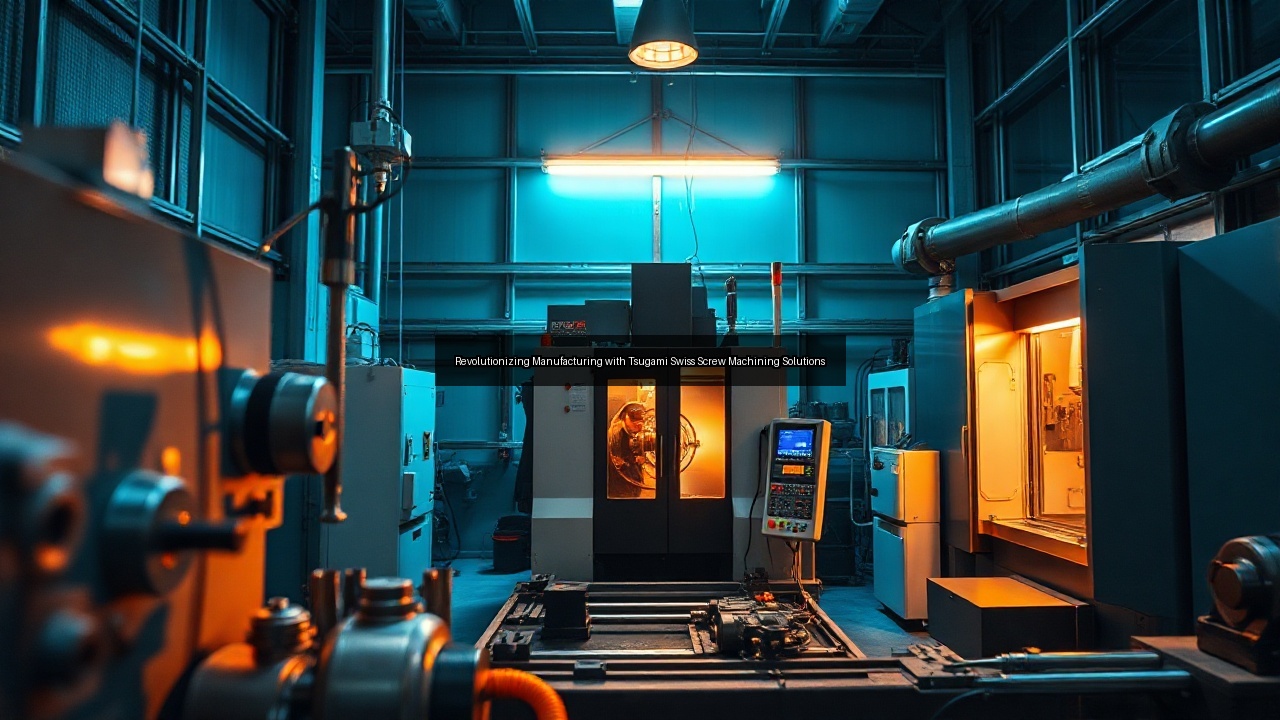
Introduction to Tsugami Swiss Screw Machining Solutions
Overview of Swiss Screw Machining
Swiss screw machining represents a cutting-edge approach to manufacturing precision components. This technique originated in Switzerland and has evolved into a cornerstone of modern industrial production. Swiss screw machining employs a specialized lathe, often referred to as a Swiss lathe, that excels in creating intricate parts with high levels of accuracy. The design of these lathes allows for the automatic feeding of material—typically bar stock—into the machining area, where tools perform various operations such as drilling, milling, and threading. The result is a streamlined process that maximizes efficiency while minimizing waste.
Importance of Precision in Manufacturing
Precision holds paramount importance in manufacturing, especially in industries that demand high-quality components, such as aerospace and medical. The slightest deviation in measurements can lead to significant failures or inefficiencies. Swiss screw machining thrives on this need for precision. The advanced technologies incorporated into Swiss lathes, such as the Y-axis integration, enable manufacturers to achieve tolerances as tight as ±0.001 inches. This level of accuracy not only enhances product quality but also ensures compliance with stringent regulatory standards. By adopting Swiss screw machining solutions from Tsugami, manufacturers position themselves to meet the demands of today’s competitive market while maintaining superior quality.
Key Features of Tsugami Swiss Lathes
Advanced Barfeeders for Enhanced Efficiency
One of the standout features of Tsugami Swiss lathes is their advanced barfeeders. These devices automate the feeding process, allowing for continuous operation without manual intervention. For instance, Tsugami’s barfeeders can accommodate various diameters, ranging from 12mm to 16mm, making them versatile for different screw machine applications. The barfeeders work in tandem with the Swiss lathe to ensure a consistent supply of raw material, significantly reducing setup times and increasing overall productivity. This efficiency translates into lower operational costs and the ability to handle larger production runs, making Tsugami’s solutions highly sought after in metalworking environments.
Tailstock Functionality and Benefits
Tsugami Swiss lathes feature a robust tailstock that enhances stability during machining operations. The tailstock provides additional support for longer workpieces, preventing deflection and ensuring uniformity in machining. This stability is crucial, particularly when working with delicate materials that require precision. The tailstock can be easily adjusted to accommodate various lengths, offering flexibility in production. Additionally, integrating a tailstock allows for secondary operations, such as drilling and tapping, to be performed without repositioning the workpiece. As a result, manufacturers can achieve complex geometries and intricate designs with minimal effort, boosting efficiency and reducing cycle times.
Integration of Y-Axis for Complex Machining
The integration of the Y-axis in Tsugami Swiss lathes revolutionizes the capabilities of screw machining. This feature allows for additional movement beyond the standard X and Z axes, enabling complex machining operations in a single setup. With the Y-axis, machinists can perform intricate milling operations and create features that would typically require multiple setups on traditional metalworking lathes or turret lathes. This advanced capability significantly reduces production time while enhancing the overall complexity of the components produced. By utilizing the Y-axis, manufacturers can adapt to evolving designs and specifications, making Tsugami Swiss lathes a valuable asset in any machining operation.
Comparative Analysis of Machining Technologies
Swiss Screw Machining vs. Traditional Metalworking Lathes
Swiss screw machining stands apart from traditional metalworking lathes in several key ways. Traditional lathes, such as center lathes and turret lathes, often require multiple setups to produce complex parts. In contrast, Swiss lathes integrate several functions into a single machine, allowing for the rapid production of precision components. The automatic bar feeding and the ability to perform multiple operations simultaneously set Swiss screw machining apart as a more efficient solution. As manufacturing demands increase for shorter lead times and higher precision, Swiss screw machining continues to gain a competitive edge over traditional methods.
Advantages of Swiss Machining in Production
Swiss machining offers several advantages that make it an attractive choice for manufacturers. The automated processes inherent in Swiss screw machining minimize human error and enhance consistency. Additionally, the ability to create intricate designs without changing setups leads to significant time savings. Manufacturers can produce small quantities of complex parts with high precision, making Swiss machining ideal for industries like aerospace and medical devices, where reliability is non-negotiable. Furthermore, the reduction in cycle times and waste contributes to a more sustainable manufacturing process, aligning with modern industry standards focused on efficiency.
Role of CNC Lathes and Turret Lathes in Modern Manufacturing
CNC lathes and turret lathes play vital roles in modern manufacturing, each serving distinct functions. CNC lathes offer programmable automation, allowing for complex machining operations based on digital designs. This flexibility complements Swiss screw machining, particularly in environments where rapid prototyping and design modifications occur. Turret lathes, on the other hand, excel in high-production runs of simpler components. While both technologies have their merits, Swiss screw machining provides unmatched efficiency and precision for intricate parts, making it a preferred option for high-stakes industries. The combination of these technologies in a manufacturing setting can maximize output while maintaining quality.
Applications and Innovations in Swiss Screw Machining
Screw Machining in Aerospace and Medical Industries
The aerospace and medical industries heavily rely on screw machining for producing critical components. Swiss screw machining offers unmatched precision, making it ideal for applications such as aircraft engines and surgical instruments. Components like screws, bolts, and specialized fittings manufactured using Swiss techniques ensure safety and reliability in high-stakes environments. The ability to achieve tight tolerances and complex geometries allows engineers to design innovative solutions that enhance performance and functionality. As these industries continue to evolve, the importance of Swiss screw machining in producing high-quality parts cannot be overstated.
The Future of Swiss Machining: Trends and Innovations
Innovation drives the future of Swiss machining. Emerging technologies such as additive manufacturing and smart machining are beginning to intersect with traditional machining methods. These trends promise to enhance efficiency, reduce waste, and improve product quality. Moreover, increasing automation through robotics and AI integration within Swiss screw machining processes will likely transform production capabilities. As manufacturers embrace these advancements, they will be better positioned to meet the demands of a rapidly changing market, ensuring that Swiss machining remains at the forefront of precision manufacturing.
Implementing Threading and Milling Techniques in Screw Machining
Threading and milling represent essential operations in screw machining, enabling the production of complex parts. Swiss screw machining excels in these areas, allowing for simultaneous operations that enhance productivity. The incorporation of advanced threading tools and milling capabilities into Swiss lathes means that manufacturers can produce intricate threads and features with remarkable speed and accuracy. Implementing these techniques not only streamlines the manufacturing process but also reduces the need for secondary operations, further optimizing production efficiency. As the demand for high-precision components rises, the integration of these techniques in Swiss screw machining will play a pivotal role in meeting industry standards.
See Also
- How Swiss Screw Machining Revolutionizes High-Volume Production
- The Benefits of Milling Over Traditional Screw Machining Methods
- Mastering the Art of Threading with Swiss Screw Machining Techniques
- Comparing CNC Lathes and Swiss Lathes for Precision Part Manufacturing
- Why Swiss Screw Machining is Essential for Precision Parts Under 16mm