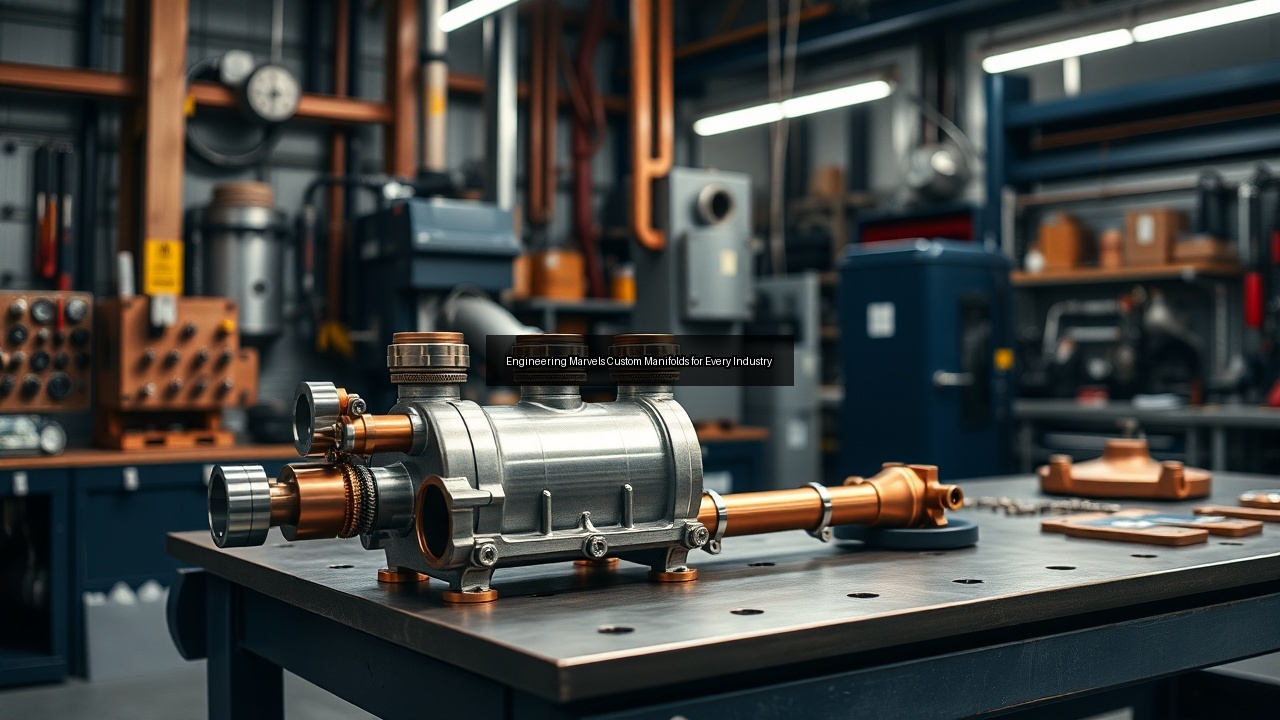
Engineering Marvels Custom Manifolds for Every Industry
Understanding Custom Manifolds and Their Applications
Overview of Manifolds and Their Importance
Custom manifolds play a pivotal role in various industrial applications. These engineered components streamline the flow of fluids, such as hydraulic oils and gases, ensuring efficiency and reliability in systems. A manifold acts as a central hub, directing fluid from multiple sources to different destinations. By optimizing fluid dynamics, custom manifolds enhance overall performance and reduce energy consumption. In sectors where precision and dependability matter, custom manifolds become indispensable. They allow for tailored solutions that meet specific operational requirements, making them a cornerstone of modern engineering practices.
Furthermore, the design and implementation of custom manifolds can significantly impact maintenance costs and system longevity. By reducing the number of potential leak points and simplifying the system layout, manifold designs can enhance reliability while lowering the total cost of ownership. This makes them not only a functional element but also a strategic component in system design.
Industries Utilizing Custom Manifolds
Numerous industries benefit from custom manifolds, including construction, mining, agriculture, and oil and gas. In construction and mining, hydraulic systems rely heavily on custom manifolds to manage fluid power effectively. These industries require robust components that can withstand harsh conditions while delivering consistent performance. In agriculture, fluid power applications, such as irrigation systems and machinery, utilize custom manifolds to optimize resource usage. The oil and gas sector employs custom exhaust manifolds for thermal management, ensuring that systems operate within safe temperature ranges. From forestry to manufacturing, the versatility of custom manifolds meets diverse industry needs.
Moreover, custom manifolds are essential in the automotive industry, particularly in performance vehicles and heavy-duty trucks, where fluid management is critical for optimal engine performance and efficiency. Their adaptability to various applications underlines their importance across multiple sectors, reflecting a growing trend toward customized engineering solutions tailored to specific operational challenges.
Key Components: Valves, Pipes, and Materials
The effectiveness of custom manifolds hinges on their key components: valves, pipes, and materials. Valves control the flow of fluids, providing precise management essential for hydraulic applications. Ball valves, for instance, offer excellent sealing capabilities and durability, making them ideal for high-pressure environments. Other types of valves, such as gate valves and check valves, may also be used depending on the specific requirements of the system.
Pipes connect different parts of the system, facilitating the movement of fluids. The choice of materials, such as stainless steel and aluminum, significantly impacts performance and longevity. Stainless steel provides excellent corrosion resistance, ideal for harsh environments, while aluminum offers lightweight solutions without compromising strength. In addition to these materials, advanced composites and polymers are increasingly being explored for applications requiring even greater resistance to corrosion and temperature fluctuations.
Selecting the right combination of components ensures that custom manifolds operate efficiently and reliably. This selection process often involves a detailed analysis of the working environment, including factors like temperature, pressure, and the nature of the fluids being transported, to ensure the integrity and performance of the manifold over its operational lifespan.
The Design and Manufacturing Process of Custom Manifolds
Engineering Considerations for Custom Designs
The design of custom manifolds requires careful engineering considerations. Engineers must assess the specific needs of the application, including flow rates, pressure requirements, and environmental conditions. Each manifold design starts with a thorough analysis of the system it will serve. Factors such as the type of fluids, temperature variations, and potential contaminants influence the design process. Engineers also consider the layout, custom manifolds design ensuring that the manifold enables optimal fluid flow while minimizing resistance and turbulence.
Customization allows for the incorporation of specific features, such as integrated valves or sensors, enhancing functionality. For instance, sensors can be embedded within the manifold to monitor pressure and flow rates in real-time, allowing for predictive maintenance and enhanced system efficiency. Balancing performance and manufacturability is crucial in creating effective custom manifolds. The use of modular designs may also be considered, allowing for easier upgrades and repairs in the field.
Software Tools for Manifold Design
Advancements in software tools have revolutionized the design process for custom manifolds. Engineers leverage Computer-Aided Design (CAD) software to create detailed models, allowing for precise visualization and modification. These tools facilitate simulations to test fluid dynamics, helping engineers identify potential issues before fabrication. Additionally, software can optimize the layout and component placement, ensuring that the manifold meets design specifications. Some platforms even offer integrated analysis capabilities, allowing for real-time adjustments based on performance metrics.
Moreover, the integration of Computational Fluid Dynamics (CFD) software enables engineers to simulate fluid flow through the manifold under various conditions, resulting in enhanced design accuracy. This allows teams to conduct virtual testing, minimizing the need for physical prototypes and reducing time-to-market for new designs. By utilizing advanced software, companies can accelerate the design process, reduce errors, and enhance the overall quality of custom manifolds.
Fabrication Techniques: From Steel to Aluminum
Fabrication techniques for custom manifolds vary based on material and design requirements. Steel and aluminum are common choices, each offering unique benefits. Steel manifolds provide strength and durability, making them ideal for high-pressure applications. Techniques such as welding and machining are often employed to create robust structures that withstand demanding conditions. On the other hand, aluminum offers a lightweight alternative that excels in applications where weight savings are crucial. Techniques such as extrusion and CNC machining enable precise fabrication, ensuring that the finished product meets stringent specifications.
The choice of fabrication technique influences the performance, cost-effectiveness, and longevity of the custom manifold. Emerging methods such as additive manufacturing (3D printing) are also gaining traction, allowing for intricate designs and reduced material waste. This innovative approach can lead to faster prototyping and adjustments in design, further enhancing the efficiency of the manufacturing process.
Custom Manifold Solutions Across Various Industries
Hydraulic Systems in Construction and Mining
Custom manifolds are integral to hydraulic systems in construction and mining. These industries rely on powerful hydraulic machinery to perform tasks ranging from lifting heavy loads to drilling. Custom manifolds facilitate the efficient transfer of hydraulic fluid, ensuring that machinery operates smoothly and effectively. In construction, for instance, excavators and cranes utilize hydraulic systems that depend on custom manifolds to manage fluid flow seamlessly. In mining, the harsh environments demand robust systems capable of withstanding high pressure and potential contaminants.
Custom manifolds ensure that these hydraulic systems remain operational, enhancing productivity and safety in challenging conditions. The design of these manifolds often includes features such as pressure relief valves and filtration systems, which further protect the machinery from damage and ensure continuous operation.
Fluid Power Applications in Agriculture
In agriculture, custom manifolds play a crucial role in fluid power applications, particularly in irrigation and machinery operation. Farmers increasingly rely on advanced hydraulic systems to enhance productivity and efficiency. Custom manifolds enable the precise management of water and other fluids, ensuring optimal irrigation practices. They also integrate with agricultural machinery, providing the necessary hydraulic power to operate implements like plows and harvesters. By optimizing fluid flow, custom manifolds contribute to sustainable agricultural practices, reducing water waste and improving crop yields.
The versatility of custom designs allows for tailored solutions that meet the specific needs of modern farming operations. For example, manifolds can be designed to accommodate varying water pressures depending on the crop type or terrain, ensuring that farmers can maximize their yield while conserving resources. Additionally, the incorporation of smart technology into these systems allows for data collection and analysis, further enhancing operational efficiency.
Thermal Management for Exhaust Systems in Oil and Gas
Custom manifolds serve a vital function in thermal management for exhaust systems in the oil and gas industry. These systems must maintain optimal operating temperatures to ensure safety and efficiency. Custom exhaust manifolds manage the flow of exhaust gases, preventing overheating and potential damage to equipment. Engineered to withstand harsh conditions, these manifolds often feature materials like stainless steel for enhanced durability. The design process focuses on minimizing back pressure while maximizing exhaust flow, which is crucial for maintaining engine performance.
As the oil and gas sector faces increasing regulatory pressures, the efficiency of custom exhaust systems becomes paramount in reducing emissions and improving sustainability. Innovative designs may include features such as heat exchangers and integrated cooling systems, which further enhance thermal management and operational efficiency. By investing in high-quality custom manifolds, companies can not only comply with regulations but also improve their overall environmental impact.
See Also
- The Importance of Custom Manifolds in High-Performance Exhausts
- Why Custom Stainless Steel Manifolds are the Go-To for Fluid Power
- Transforming Forestry Operations with Custom Hydraulic Manifolds
- Custom Manifolds The Unsung Heroes of Efficient Engineering
- Custom Manifolds and Their Impact on the Oil and Gas Industry